
Repiping
Polybutylene And Galvanized Pipes In Denver Homes: How To Tell And What To Do
Two pipe materials cause most of the supply line trouble in older homes. Both can be identified in a few minutes.
How to identify polybutylene and galvanized steel, which Denver homes are likely to have them, the symptoms of each, and what a repipe actually involves.
Most supply pipe lasts a very long time. Two materials are the exception: polybutylene, a plastic pipe installed from roughly the late 1970s to the mid 1990s, and galvanized steel, the threaded pipe found in many older homes. Both fail in predictable ways, and both are usually replaced rather than repaired.
Repiping is one of the plumbing services we provide across Denver Metro, and this guide explains how to tell what you have, what the symptoms look like, and what the work involves before anyone opens a wall. It covers supply pipe, the lines that carry pressurized water to your fixtures. Drain lines are a separate subject.
Polybutylene And Galvanized Pipes: The Short Answer
Polybutylene is flexible plastic supply pipe, usually gray but sometimes blue or black, installed from roughly the late 1970s to the mid 1990s. It fails at the fittings and from within, often with little warning.
Galvanized steel is gray, threaded pipe found in older homes. It corrodes from the inside, which narrows the pipe and chokes water pressure. Both are usually replaced rather than repaired, because spot repairs on aging pipe tend to lead to more of them.
How To Identify Polybutylene
Polybutylene is a flexible plastic pipe, most often gray, sometimes blue on outdoor service lines, and occasionally black. It bends in gentle curves rather than running in straight, rigid lengths.
Look for a printed stamp along the side of the pipe. Polybutylene is commonly marked with the code PB2110. The print fades with age, so check several spots with a flashlight.
Where to look:
- At the water heater. The supply lines entering and leaving the top of the tank are often the easiest exposed pipe in the house.
- At the water meter and main shutoff. Where the water service enters the house, usually in the basement or a crawl space. A blue or gray plastic pipe coming through the foundation may be a polybutylene service line.
- Under sinks. Look at the pipe coming out of the wall behind the shutoff valves. The short flexible connector from the valve to the faucet is usually a supply tube, not the house piping.
- In unfinished basement ceilings. Runs along the joists are usually visible here.
Fittings help confirm it. Polybutylene was commonly joined with plastic or metal insert fittings held by a crimped copper or aluminum ring. PEX, the modern plastic pipe, can look similar, but it is usually red, blue, or white and is printed with the letters PEX along its side.
How To Identify Galvanized Pipe
Galvanized steel is rigid metal pipe with a dull gray finish. It joins with threaded fittings, so you will see threads where the pipe enters each elbow and tee, and the fittings are noticeably bulkier than the pipe.
Two quick tests confirm it:
- The magnet test. A refrigerator magnet sticks firmly to galvanized steel. It will not stick to copper, plastic, or lead.
- The scratch test. Scrape a small spot with a key or a coin. Galvanized steel shows a silver gray surface and stays hard. Copper shows a penny color. Lead is soft and scratches easily to a shiny silver, and the magnet will not stick to it.
Many older homes have a mix. A previous owner may have replaced part of the system with copper or PEX and left galvanized sections in place, often inside walls where they were hard to reach. Check several places, not just one.
Which Denver Homes Have Them
Galvanized steel was a common supply pipe for decades before copper took over, and it is most likely in older homes. In Denver, that points to pre war neighborhoods such as Capitol Hill, Congress Park, Washington Park, Baker, and Highland, along with older homes throughout the metro. Many of these houses have been partly or fully repiped over the years, so age alone does not settle the question.
Polybutylene was installed in many homes built from roughly the late 1970s to the mid 1990s, in new construction and in repairs and additions. If your home was built during that window, check for it. The construction year is on your county assessor record, and it is usually in the listing or inspection report from when you bought the house.
Build year is a starting point, not a verdict. Builders chose different materials, and many homes from those years were plumbed in copper. Only a look at the actual pipe answers the question. Our guides to plumbing in older Denver homes and to Highlands Ranch, where many homes date from the polybutylene era, cover what else to watch for in each.
Symptoms Of Each
Galvanized steel
- Low water pressure, often worse on the hot side and worse over time.
- Discolored water, brown or rust colored, especially first thing in the morning or after a fixture sits unused.
- Uneven flow, where one fixture is strong and another is weak, or pressure drops sharply when two fixtures run at once.
- Leaks at threaded joints, where the cut threads leave the pipe wall at its thinnest.
Polybutylene
- Leaks at fittings, often at crimp connections.
- Failures with little warning. The pipe can degrade from the inside, so it may look fine on the outside until it splits.
- Blistering, flaking, or discoloration on the pipe surface in some cases.
Polybutylene also comes up outside the plumbing itself. Some homeowners insurance companies ask about it when writing or renewing a policy, and some may apply conditions or decline coverage. Policies vary, so check with your own insurer rather than assuming either way.
Repair Or Repipe?
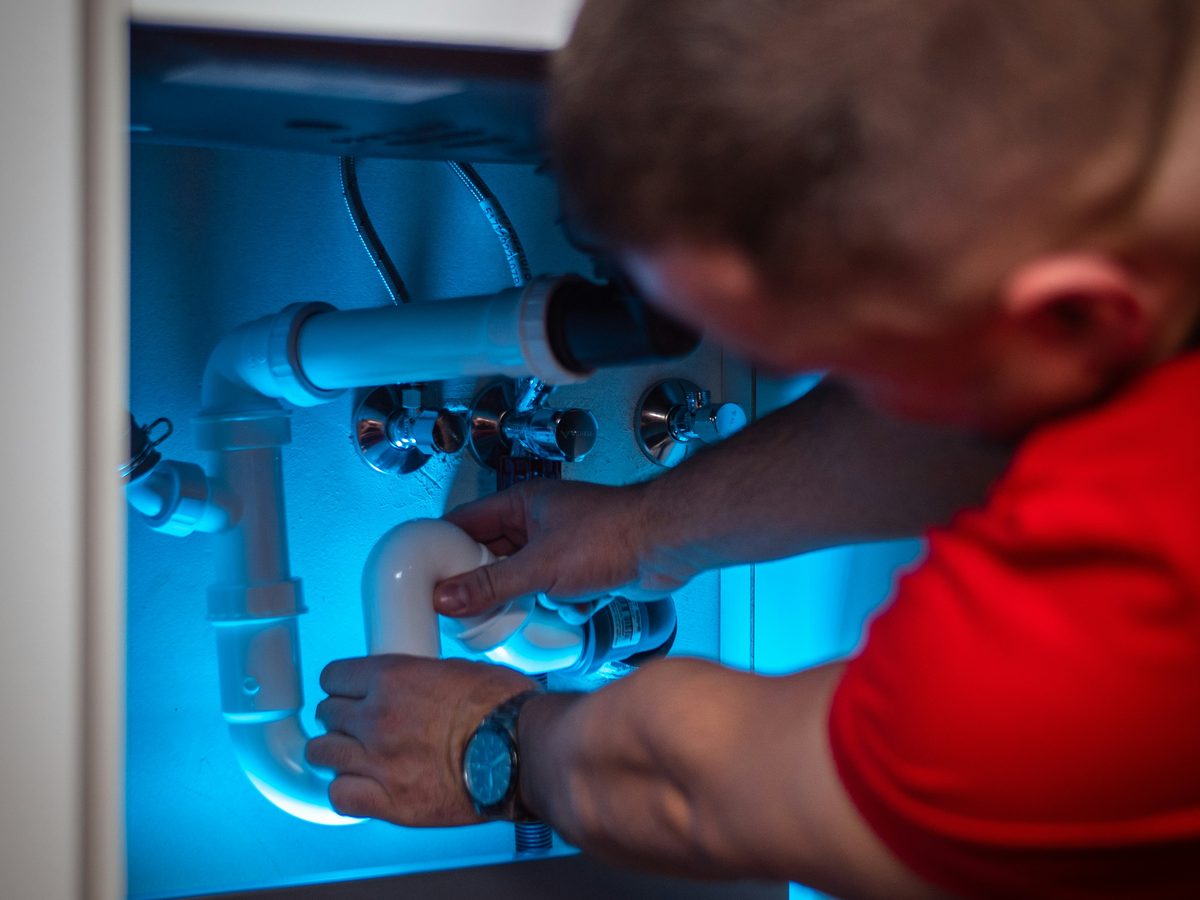
A single leak on polybutylene or galvanized pipe can be repaired, and sometimes a repair is the right call to get you through to a planned replacement. The problem is what happens next.
Aging pipe tends to fail in sequence. The conditions that caused the first leak are present everywhere else in the system, so a repair on one section is often followed by another leak a few feet away. With galvanized pipe, a spot repair can also knock loose corrosion inside the line, sending debris into faucet aerators and valves. Each repair adds another joint between old and new material, and each one usually means another opening in a wall or ceiling.
That is why a full repipe is usually the lasting fix. It replaces the whole supply system at once, on a planned schedule, instead of through a series of emergency repairs. If you are seeing repeated leaks, or pressure that keeps dropping, it is worth having the system evaluated before the next failure.
Repeated Leaks Or Low Pressure
Find Out What You Have Before The Next Leak
A licensed plumber identifies the pipe material, tests the pressure, and gives you the options in writing, from a targeted repair to a full repipe.
Call 720-295-9903Repiping and leak repair across Denver Metro.
What Repiping Involves
A repipe replaces the supply lines from the main shutoff to every fixture. The two common materials are PEX and copper.
- PEX is flexible plastic pipe that can be pulled through walls and ceilings in long lengths with fewer fittings. That flexibility usually means fewer and smaller openings in finished walls, and it tolerates freezing better than rigid pipe.
- Copper is rigid, long lasting, and familiar to inspectors and buyers. It takes more fittings to install, and it often needs more wall access to route.
Wall access and patching. Plumbers open small sections of drywall or plaster to reach the pipe runs, usually near fixtures and along floor and ceiling lines. An unfinished basement or an accessible crawl space reduces the number of openings. Before work starts, ask whether patching is included or whether you will need a separate drywall or plaster repair afterward.
Permits and inspection. A repipe is permitted work in Denver and the surrounding jurisdictions. The plumber pulls the permit, and an inspector checks the new piping before the walls are closed.
Disruption. In most repipes the house has water at the end of each work day, with the water shut off for stretches while sections are connected. How long the job takes depends on the size of the house, the number of bathrooms, and how accessible the existing piping is. Your plumber should give you a schedule before work begins.
Lead Service Lines Are A Separate Issue
Everything above concerns the pipe inside the house. The water service line, the pipe that runs from the street to your meter or main shutoff, is a separate question.
In older Denver homes, that line may be lead. Denver Water estimates that 60,000 to 64,000 properties may still have one, with homes built before 1951 the most likely, and it runs a Lead Reduction Program to replace them with copper. If you are planning a repipe in an older home, check the service line at the same time, and read more about lead service line replacement on our main page.
If you are not sure what you have, start at the meter and the water heater, run the magnet and scratch tests, and look for the PB2110 stamp. If you find either material, or a mix you cannot identify, our licensed plumbers can confirm it and explain your options. If a pipe has already failed, our pages on leak detection and frozen pipe prevention and repair cover the next steps.
CO Lic. #PC.0005786 · CO Lic. #EC.0101962. This article is general guidance for Denver Metro homeowners and does not replace an on site inspection of your specific system.
Questions
Polybutylene And Galvanized Pipe Questions
Is polybutylene pipe illegal?
No. It is not illegal to have polybutylene in your home, and no law requires you to remove it. It is generally no longer accepted for new installations under current plumbing codes, and its failure history is why many homeowners choose to replace it. Some insurers and buyers also treat it as a concern, which can make replacement worth planning before you sell.
Can I replace only part of it?
You can, and sometimes a partial replacement makes sense, such as replacing an exposed run in a basement while planning the rest. The tradeoff is that the remaining sections keep the same risk, and every connection between old and new pipe is another joint to watch. With galvanized pipe, a partial replacement can also leave restricted sections that keep pressure low.
Will repiping fix my water pressure problems?
If the cause is galvanized pipe narrowed by corrosion, repiping usually restores pressure, often noticeably. Low pressure can also come from a failing pressure reducing valve, a partly closed main shutoff, or a restricted water service line, so a plumber should test the system and confirm the cause before recommending a repipe.
How long does a repipe take?
It depends on the size of the house, the number of bathrooms, the pipe material chosen, and how much of the piping can be reached from a basement or crawl space. A smaller home with an open basement takes far less time than a large home with finished ceilings on every level. Your plumber should give you a written schedule before work begins.
Do I need to move out?
Usually not. Most repipes are planned so the water is off for limited stretches during the work day and back on in the evening. Expect noise, protective coverings, and some open walls for a period. Households with infants, medical needs, or work from home schedules may want to plan around the noisiest days.
Does a home inspection catch this?
Often, if the pipe is visible. A home inspector will usually note polybutylene or galvanized pipe where it is exposed, such as at the water heater or in an unfinished basement. Pipe hidden inside finished walls may not be identified, and an inspector does not typically test pressure throughout the system or confirm the material of every run.
Keep Reading
How To Keep Pipes From Freezing In A Denver Winter
What freezes first here, the fall checklist, and what to do if a line has already frozen.
Read the article
Leak Detection and Repair
Hidden leaks behind walls, under slabs, and beneath floors, found before the damage spreads.
View leak detectionRepiping
Replace It On Your Schedule, Not After A Leak
Pipe identification, pressure testing, and full or partial repiping in PEX or copper across Denver Metro. A licensed plumber inspects the actual system and puts the price in writing before any work begins.
CO Lic. #PC.0005786 · CO Lic. #EC.0101962 · 2M GL · 5M Umbrella · Bonded · Insured