
Buying A Home
Should You Get A Sewer Scope Before Buying A Denver Home?
The most expensive part of an older Denver house is often the part nobody can see.
What a sewer scope inspection is, what the footage shows, which homes need one, and how to fit it inside the inspection period on your contract.
A standard home inspection usually stops at the drains. The inspector runs water, watches it empty, and moves on. Everything between the house and the city main, often a long run of buried pipe, goes unexamined. In an older Denver home, that run is where some of the largest repair surprises in the house tend to hide.
A sewer scope fills that gap. This guide is for buyers who are under contract or about to be. If you already own the home and the main line is backing up, our drain cleaning and sewer line service page covers clearing it.
Should You Get A Sewer Scope? The Short Answer
A sewer scope is a camera run through the sewer service line, from the cleanout to the connection at the city main, with the footage recorded so you can review it and share it.
Get one on most older Denver homes, and on any home with mature trees near the line or a history of backups. Schedule it inside your inspection period, early enough that the findings can go into an inspection objection.
What A Sewer Scope Is And What You Receive
A plumber feeds a waterproof camera on a flexible push rod into the sewer line through a cleanout, usually in the basement, a crawl space, or the yard near the foundation. The camera travels the line toward the street while the plumber watches a live screen and records the run. A counter on the rod tracks distance, so every defect on the footage comes with a location.
What you should walk away with:
- Recorded footage of the full run. Not a few still photos. You want video you can review again, send to your agent, and show to a second contractor if you want a comparison.
- The pipe material, section by section. Clay, cast iron, Orangeburg, and plastic all behave differently, and many older lines change material partway to the street.
- Each defect with its distance from the cleanout. A root intrusion at twelve feet is likely under the front yard. The same defect at sixty feet may be under the street. That distance decides what a repair involves.
- A plain written summary. What was found, where, and how serious it is, in language you can hand to your agent.
Ask before you book whether you will receive the footage itself. A verbal summary at the end of the visit is not enough to support an objection.
Why It Matters More In Denver
Three local conditions make the sewer line a bigger question here than in many cities.
Older pipe. Neighborhoods such as Capitol Hill, Congress Park, Washington Park, Baker, and Highland were largely built when clay tile was a standard sewer pipe, laid in short sections with a joint every few feet. Cast iron, common inside older homes and on some laterals, scales and cracks with age.
Expansive clay soil. Much of the metro sits on clay that swells when wet and shrinks when dry. Over decades, that movement can settle a section of pipe into a low spot, called a belly, where water and waste collect.
Mature trees. The street trees that make older neighborhoods attractive send roots toward moisture, and a joint in a clay line is an easy way in.
For how these problems are cleared and repaired once you own the house, see our drain cleaning page. For what we see across the city more broadly, see our guide to plumbing in older Denver homes.
Which Homes Should Get One
A scope is a short visit that answers one of the largest open questions on an older house. These are the situations where we would not skip it.
- Older homes. Any house old enough to have clay or cast iron in the line. In central Denver, that covers a large share of the housing stock.
- Mature trees near the line. Look at where the sewer likely runs, usually from the front of the house toward the street, and check for large trees along that path, including in the strip between the sidewalk and the curb.
- A history of backups. Ask the seller directly, and read the disclosure carefully for any mention of sewer or drain problems.
- Long vacancy. A house that sat empty has not had water moving through the line, so a problem may not have shown itself yet.
- Visible warning signs. A floor drain that gurgles, staining or a water line around a basement drain, a fresh concrete patch in the driveway, or a strip of new sod or settled soil between the house and the street. Each can point to a past repair or an active problem.
Newer homes are not automatically in the clear. A scope can still catch construction debris, a section damaged by later landscaping, or a joint that settled. The questions below cover that.

What The Footage Can Show
These are the findings that appear most often on older Denver lines, and what each one means for a buyer.
- Roots at joints. Fine root hair or a dense mat at a joint. Light roots can often be cleared and managed. Heavy intrusion usually means the joint has opened and that section will need repair.
- Offset or separated joints. One section has shifted out of line with the next, leaving a lip that catches waste or a gap that lets roots and soil in.
- Bellies. A low section where water sits on the camera screen instead of draining. A small belly may be livable. A long or deep one tends to cause recurring clogs.
- Cracks and breaks. Anything from a hairline crack to missing pipe wall. A break with soil visible is a repair item, not a maintenance item.
- Scale in cast iron. Corrosion that builds up on the inside wall and narrows the pipe, sometimes with the bottom of the pipe worn through.
- Transitions between materials. A change from clay to plastic usually marks a past repair. That is useful history, and the joint where the two materials meet deserves a close look.
- Debris and blockages. Grease, wipes, or objects. These are often cleared rather than repaired, though a blockage can hide a defect behind it.
Buying An Older Home
Under Contract On An Older Home? Schedule A Scope Before Your Deadline
A licensed plumber runs the camera from the cleanout toward the main, records the full line, and gives you the findings in writing in time for your objection.
Call 720-295-9903Sewer camera inspection across Denver Metro.
What A Sewer Scope Does Not Tell You
A sewer scope looks at one pipe: the drain line leaving the house. It says nothing about the water service line, the separate pipe that brings drinking water in from the street.
That second line matters in older Denver homes. Denver Water estimates that 60,000 to 64,000 properties may still have a lead water service line, with homes built before 1951 the most likely, and it runs a Lead Reduction Program to replace them. If the house you are buying is that age, ask your inspector to note the material where the water line enters the house, and read more about lead service line replacement on our main page.
A scope also does not test the plumbing inside the walls, the water heater, or the fixtures. Those belong to the general home inspection. If the inspection turns up signs of a hidden leak, such as staining, a water meter that moves with everything turned off, or unexplained moisture, leak detection is the next step.
Who Owns The Line
In Denver, the property owner is generally responsible for the sewer service line from the house to the public main, including the portion under the street. The city maintains the main itself. Most surrounding cities and sanitation districts follow a similar pattern.
The details vary by jurisdiction, including exactly where responsibility changes hands and who handles work in the street. If the house is in a suburban city or an unincorporated area, confirm the specifics with that city or district before you rely on them. The practical point holds almost everywhere: once you close, a problem in the service line is most likely yours to repair.
Timing It Within Your Inspection Period
The standard Colorado purchase contract sets an Inspection Objection Deadline. Anything you want the seller to address generally has to be raised in writing by that date. A sewer scope only helps your negotiation if the findings arrive before it.
- Book the scope as soon as you are under contract. Do it when you book the general inspection. Do not wait for the inspection report to suggest it.
- Confirm access to a cleanout. The listing agent may need to arrange entry, and some homes need a cleanout located or a toilet pulled before the camera can go in.
- Get the footage and the written summary quickly. Your agent needs time to turn them into an objection before the deadline.
- If a defect appears, get a written repair scope. A description of the work, the location, and whether it involves digging in the yard or the street gives your agent something concrete to work with.
- Talk to your agent about the options. Common outcomes include a seller repair before closing, a credit, a price adjustment, or ending the contract under its inspection terms. Which one fits is a negotiation question, and your agent is the right person to guide it.
Check your actual dates
Every contract is different, and deadlines can be changed by agreement. Read the dates in your own contract rather than relying on a typical timeline, and ask your agent if anything is unclear.
If the scope comes back clean, you have one fewer unknown on the house. If it does not, you found out while you still had options. Either way, our licensed plumbers can walk you through the footage, and if you buy the home, handle the repair or maintenance the line needs.
CO Lic. #PC.0005786 · CO Lic. #EC.0101962. This article is general guidance for Denver Metro homeowners and does not replace an on site inspection of your specific system.
Questions
Sewer Scope Questions
How long does a sewer scope take?
The camera work itself usually takes well under an hour on a typical single family home. Locating the cleanout, getting access, and reviewing the footage with you adds time. Lines with more than one cleanout, heavy roots, or a blockage that has to be cleared before the camera can pass take longer.
Can a new home have sewer problems?
Yes, though it is less common. Construction debris left in the line, a section damaged by later landscaping or a fence post, a joint that settled as the soil compacted, and a belly from poor bedding under the pipe all show up on newer lines. A scope on a newer home is optional for most buyers, but it is worth considering if the house shows signs of settling.
Is a sewer scope part of a standard home inspection?
Usually not. A general home inspection typically checks that drains empty and looks at visible piping, but it does not run a camera through the buried line. Some inspectors offer a scope as an add on or refer it out. Ask your inspector what is included rather than assuming.
Do I need to be there?
It is not required, but it is worth being there if you can. Watching the screen while the plumber explains what each section shows is the fastest way to understand the findings. If you cannot attend, make sure you receive the recorded footage and a written summary.
What happens if roots are found?
It depends on how many and where. Light root hair at a joint can often be cleared and kept in check with periodic maintenance. Heavy intrusion, or roots coming through a crack or an open joint, usually means that section needs repair. The footage and the distance from the cleanout tell you which situation you are in.
Does the seller have to fix it?
Not automatically. A sewer defect found during inspection is generally a matter for negotiation under your contract, not something the seller is required to repair. Buyers commonly ask for a repair, a credit, or a price change, and the seller can accept, counter, or decline. Your real estate agent, and an attorney if you need legal advice, are the right people to guide that decision.
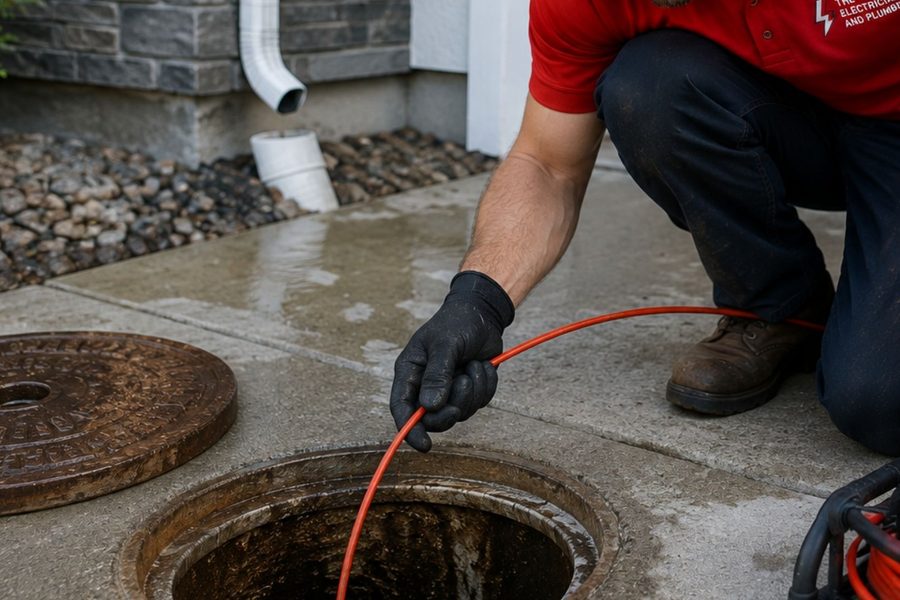

Sewer Camera Inspection
Know What Is In The Line Before You Close
Sewer camera inspection for buyers and homeowners across Denver Metro. A licensed plumber records the full line, explains what it shows, and puts the findings in writing.
CO Lic. #PC.0005786 · CO Lic. #EC.0101962 · 2M GL · 5M Umbrella · Bonded · Insured