
Water Heaters
Why Is My Water Heater Popping Or Rumbling?
Most water heater noises are a maintenance problem. A few are a reason to stop.
A noise by noise guide to popping, rumbling, crackling, ticking, screeching, humming, and hissing, with what causes each one and what to do about it.
Water heaters are not silent, but they should not sound like a pot of popcorn. When a tank starts popping, rumbling, or hissing, the sound is usually telling you something specific, and in most Denver homes it is telling you about sediment.
This guide sorts the common noises by sound. If you are deciding whether a heater is worth keeping at all, our guide to the signs you need a new water heater covers repair versus replacement.
Why Is My Water Heater Making Noise? The Short Answer
Popping or rumbling is almost always sediment on the bottom of the tank. Water trapped under the layer flashes to steam and bursts up through it, and hard Denver water speeds the buildup.
Most noises are a maintenance issue rather than an emergency. Stop and call if you hear hissing with water present, see the temperature and pressure relief valve discharging, or smell gas.
Noise By Noise: What You Are Hearing
Find the sound below, then read the likely cause and the next step.
Popping or rumbling
Likely cause: sediment. Minerals settle out of heated water and collect on the tank bottom. On a gas unit, the burner heats that layer from below, water trapped underneath boils, and steam bubbles push up through the sediment with a pop. On an electric unit, sediment buries the lower element and the water around it boils the same way.
What to do: a flush can clear loose sediment. On a tank that has been flushed regularly, that is a routine job. On a tank that has never been flushed, read the flushing section below first. Popping that continues after a proper flush usually means the sediment has hardened, which is a sign the tank is aging.
Crackling or sizzling
Likely cause: on a gas unit, condensation dripping onto the hot burner. It is most common when the tank refills with cold water, such as after heavy hot water use on a winter morning, and it usually fades as the tank warms. On an electric unit, a sizzle can come from scale on the heating element.
What to do: a condensation sizzle that comes and goes is normal. If the sizzling is constant, or you see water pooling under the burner area, have it checked, because that water may be coming from the tank rather than from condensation. A scaled electric element can be cleaned or replaced.
Ticking or tapping
Likely cause: pipes expanding and contracting as hot water starts and stops flowing, or the heat trap fittings at the top of the tank. Heat traps are small valves or loops that keep hot water from rising into the pipes when nobody is using it, and some types click as they open and close.
What to do: usually nothing. Ticking is a comfort issue, not a safety one. If it is loud, the fix is often a hanger that lets the pipe move without knocking against framing, or replacing a noisy heat trap.
Screeching or whistling
Likely cause: water forcing its way through a partially closed valve, most often the cold water inlet valve above the tank. A relief valve that is partly open can also whistle.
What to do: check that the inlet valve is fully open. If it is open and the noise continues, or the sound is coming from the relief valve, call a plumber. Do not force a corroded valve that will not turn.
Humming on electric units
Likely cause: a heating element that has worked loose, so water flowing past makes it vibrate. A faint hum is normal on many electric units.
What to do: a loud or new hum is worth having checked. Tightening or replacing an element means draining the tank and working near electrical connections, so turn the power off at the breaker and leave the repair to someone qualified. We hold both the plumbing and the electrical license for exactly this kind of work.
Hissing
Likely cause: one of three things, and they are not equally serious.
- Condensation on a gas burner. A brief sizzle and hiss as drops hit the flame, usually after a large draw of hot water. Normal, and it fades.
- The temperature and pressure relief valve. The valve on the side or top of the tank with a pipe running down toward the floor. If it is hissing, dripping, or discharging, the tank may be overheating or the system pressure may be too high.
- A leak. Water escaping from a fitting, the drain valve, or the tank itself.
How to tell which: look and feel. Condensation leaves no standing water and stops as the tank heats. A relief valve problem shows at the end of the discharge pipe, often as water on the floor or a drip from the pipe. A leak shows as moisture on the tank, the fittings, or the floor that keeps returning after you wipe it dry. If there is water on the floor or the relief valve is discharging, treat it as a stop and call situation.
Why Denver Tanks Get Loud
Denver water carries enough mineral content to matter over the life of a water heater. Every time the tank heats, some of those minerals settle out and land on the bottom. In a tank that is flushed regularly, the layer stays thin and loose. In a tank that is never flushed, which describes most of them, the layer thickens and hardens year after year.
That layer does more than make noise. Sediment insulates the burner from the water above it, so the burner runs longer to deliver the same hot water. The steel at the bottom of the tank runs hotter than it was designed to, which stresses the tank lining and shortens its life. Rumbling and slower recovery show up long before the tank fails. Our water heater service page covers the other local factors, including thermal expansion and the effect of altitude on gas units.
Flushing: When To Do It Yourself
Flushing means draining water out through the drain valve near the bottom of the tank, carrying loose sediment with it. On a heater that has been flushed regularly, it is a reasonable job for a careful homeowner.
On a tank that has never been flushed, be careful. Years of hardened sediment can clog the drain valve partway through, and an old drain valve may not reseat when you close it. That turns a maintenance task into a leak. If the heater is older and has never been serviced, have a plumber do the first flush. After that, an annual flush is easy to keep up.
Before you flush
Turn off the gas or the power first, and let the water cool. Water at the bottom of a tank that just finished heating is hot enough to scald. Run the drain hose somewhere the water can go safely, and stay with it the whole time.
If the popping stops after a flush, sediment was the cause. If it continues, the remaining layer is likely hardened onto the tank bottom, which flushing cannot remove. That is not an emergency, but it is a sign the tank is in the later part of its life, and the replacement signs are worth reviewing.
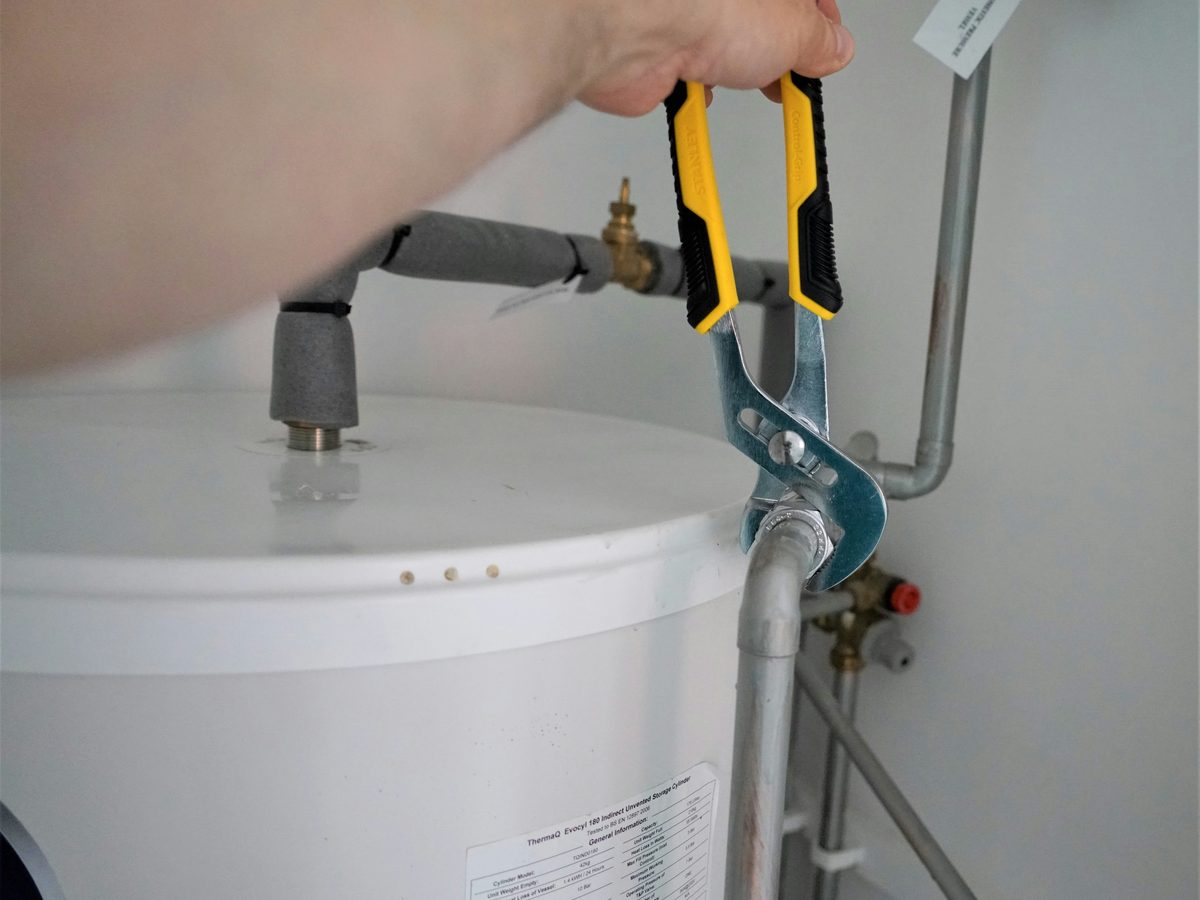
Tankless Units That Make Noise
A tankless water heater has no tank for sediment to settle in, but the same minerals build up as scale inside the heat exchanger. Scale makes the unit work harder, can cause a rattling or banging sound as water flashes against hot spots, and leads to error codes and swinging water temperature.
In hard water, annual descaling is required maintenance on a tankless unit rather than an optional service. Descaling circulates a mild acid solution through the heat exchanger to dissolve the buildup. Some sounds are normal at startup, such as fan noise and a click as the burner lights. A new or louder noise is the thing to watch for.
When The Noise Means Stop
Most of the sounds above can wait for a convenient appointment. A few cannot.
Stop and call if
You hear hissing and see water on the floor, the temperature and pressure relief valve is discharging or dripping, or you smell gas anywhere near the heater. For a gas smell, leave the house and call your gas utility from outside before you call a plumber. For a leak, close the cold water inlet valve above the tank and turn off the gas or the power.
Water Heater Noise
Hissing, A Discharging Relief Valve, Or A Gas Smell? Stop And Call
A licensed plumber will diagnose the noise, check the relief valve and the system pressure, and tell you in writing whether it is a repair or a replacement.
Call 720-295-9903Water heater repair and replacement across Denver Metro.
For anything else on this list, a noise is a symptom worth scheduling rather than ignoring. Our licensed plumbers repair and replace tank, tankless, and heat pump water heaters across Denver Metro, and if the noise turns out to be water escaping somewhere you cannot see, leak detection finds it.
CO Lic. #PC.0005786 · CO Lic. #EC.0101962. This article is general guidance for Denver Metro homeowners and does not replace an on site inspection of your specific system.
Questions
Water Heater Noise Questions
Is a noisy water heater dangerous?
Usually not. Popping, rumbling, ticking, and occasional sizzling are most often sediment, normal expansion, or condensation. The exceptions are a relief valve that is discharging, hissing with water present, and any smell of gas. Those mean stop using the heater and call. Sediment noise left alone for years is not an immediate danger, but it does shorten the life of the tank.
Will flushing stop the popping?
If the sediment is still loose, often yes. A flush carries loose material out through the drain valve, and the popping fades or stops. If the sediment has hardened onto the tank bottom, flushing removes little of it and the noise continues. On a tank that has never been flushed, have a plumber do the first one, because the drain valve can clog or fail to reseat.
Why did it start making noise after I flushed it?
A flush can loosen sediment without removing all of it, leaving pieces that rattle and pop as the burner heats the tank. Air in the lines after refilling can also cause sputtering at faucets and knocking in pipes for a short time. If the noise is new and lasts more than a few heating cycles, or the drain valve now drips, have it checked.
Does a noisy tank mean replacement?
Not by itself. Noise is a symptom, and many noisy tanks have years left after a flush or a minor repair. Replacement comes into the picture when the noise arrives with other signs, such as a leaking tank, rusty hot water, or a heater past twelve years old. Our guide to the signs you need a new water heater covers that decision.
Why is my new water heater making noise?
Some sounds are normal on a new unit, including ticking as the pipes warm, a sizzle from condensation, and fan or ignition sounds on power vented and tankless models. A new tank should not pop or rumble, since sediment takes time to build. If it does, the cause may be sediment stirred up from the old system, a valve left partly closed, or an installation issue worth having the installer check.
Keep Reading
Eight Signs You Need A New Water Heater
The eight signs a plumber looks for, how to read the age off the label, and repair versus replacement.
Read the article
Water Heater Repair and Installation
Tank, tankless, and heat pump. Repair, replacement, venting, and permits across Denver Metro.
View water heatersWater Heater Service
Tell Us What It Sounds Like
Describe the noise and a licensed plumber will tell you what is likely causing it. On a visit, we diagnose the actual unit and put the price in writing before any work begins.
CO Lic. #PC.0005786 · CO Lic. #EC.0101962 · 2M GL · 5M Umbrella · Bonded · Insured