
Plumbing Basics
Where Is Your Main Water Shutoff, And Do You Know How To Use It?
The one valve everyone in the house should be able to find in the dark.
Where the main shutoff sits in Denver area homes, how to close it, what to do right after, and how to tell when the valve itself needs to be replaced.
When a pipe bursts, a water heater splits, or a supply line under a sink lets go, the size of the damage depends on one thing more than any other: how long it takes someone to close the main water shutoff. A household water line can put several gallons a minute onto a floor, and that water keeps coming until somebody turns the valve.
Most people have never touched theirs, and plenty do not know where it is. This guide covers where the main shutoff usually sits in Denver area homes, how to close it, what to do in the first few minutes after, and how to make sure it actually works before you need it.
The Main Water Shutoff: The Short Answer
The main water shutoff is the valve that stops all water entering your home. In most Denver area houses it sits where the water line comes through the foundation, usually in the basement or crawl space on the wall facing the street, often next to the water meter. Homes on a slab often have it in the garage, a utility closet, or near the water heater.
To close it, turn a round handle clockwise until it stops, or turn a lever handle a quarter turn so it sits across the pipe. Find it now, test it once a year, and make sure everyone in the house knows where it is.
Why Knowing Where It Is Matters
Water damage is mostly a function of time. A slow drip from a failed fitting can be cleaned up with a towel. A split line running unattended for twenty minutes can soak a finished basement, wick up into drywall, and get into flooring and insulation. The pipe repair is usually the smallest part of the job. The cleanup, drying, and rebuilding are the large part, and every minute the water runs makes them larger.
The situations where you need the main in a hurry are common:
- A burst or split pipe, often after a hard freeze or when a frozen line thaws.
- A failed water heater leaking from the tank itself.
- A broken supply line to a toilet, faucet, washing machine, or refrigerator.
- A leak you cannot isolate, such as water coming through a ceiling with no obvious source.
- Planned work, such as replacing a fixture or a valve that has no shutoff of its own.
In every one of these, closing the main first and figuring out the cause second is the right order.
Where To Find It In A Denver Area Home
The main shutoff is almost always close to where the water service line enters the building. Find that point and you have usually found the valve.
Homes with basements
Look on the basement wall that faces the street, low on the wall or near the floor. In many older Denver homes the water meter is inside, and the main shutoff sits right next to it, often with a second valve on the other side of the meter. Check behind storage shelves, inside furnace closets, and behind access panels. In a finished basement, a valve hidden behind a small drywall panel is common.
Crawl spaces
In a home with a crawl space, the valve may be just inside the crawl space access, near the foundation wall on the street side. Some builders also added a second shutoff in an easier spot upstairs, often near the water heater, so check there too.
Slab homes, townhomes, and condos
Homes built on a slab often have the main shutoff in the garage, in a utility or water heater closet, or on an interior wall near where the line comes up through the floor. In townhomes and condos, your unit may have its own shutoff inside, often near the water heater or under the kitchen sink, while the shutoff for the building sits in a shared mechanical room. Ask your association where both are before you need them.
Outside the house
Some homes, particularly newer ones, have the water meter outside in a meter pit near the sidewalk or property line, under a round metal or plastic lid. There is also a curb stop, a valve on the service line near the street inside a small round box with a cap. These valves are operated with special keys and are normally handled by the water utility. Denver Water treats the service line and meter pit as the property owner's responsibility, including keeping them accessible. If the leak is between the street and the house, call the emergency number for your water utility, listed on your bill, to have the curb stop closed.
Still cannot find it? Follow the cold water line backward from the water heater, or look for the pipe coming through the foundation wall. A pressure reducing valve, a bell shaped brass fitting, often sits just past the main. While you are there, look at the pipe itself. Our guide to polybutylene and galvanized pipes explains what to watch for at the meter.
What The Valve Looks Like
Most Denver area homes have one of two types.
- Gate valve. A round handle, sometimes called a wheel handle, on a brass body. It takes several full turns to close. Gate valves are common in older homes, and they are the type most likely to seize, leak at the stem, or fail to shut off completely after years without use.
- Ball valve. A straight lever handle that closes with a quarter turn. When the lever runs in line with the pipe, the valve is open. When it sits across the pipe, the valve is closed. Ball valves are more reliable and are the standard choice when a main shutoff is replaced.
You may also find a valve on each side of the water meter, a pressure reducing valve just past the main, and a separate valve for the irrigation system. Label the main clearly so nobody has to guess which one it is during an emergency.
How To Close It
- Clear the path. Move anything stored in front of the valve so you can reach it quickly.
- Turn it the right way. For a round handle, turn clockwise until it stops. For a lever, turn it a quarter turn until it sits across the pipe.
- Do not force it. If a gate valve will not turn with firm hand pressure, stop. A wrench or a length of pipe for leverage can snap an old valve stem, and a broken stem can turn a leak into a flood at the valve itself. If the main will not close, call your water utility to close the curb stop, and call a plumber.
- Confirm the water is off. Open a faucet on the lowest level of the house. Flow should slow to a trickle and stop as the lines drain.
- Take care of the water heater if the shutdown will be long. A tank water heater stays full when the main is closed, so a short shutdown is fine. If the water will be off for hours, or you will drain the lines, set a gas water heater to vacation or pilot and switch an electric water heater off at the breaker. An electric element that heats without water around it fails quickly.
Tell everyone where it is
The person who discovers a leak is not always the person who knows where the valve is. Show every adult and older child in the house, and anyone who house sits for you. A tag on the valve and a photo saved on your phone both help.
Turning The Water Back On
Once the repair is done, open the main slowly. Turning it back on all at once sends a surge of pressure and air through the lines, which can knock loose sediment and stress old fittings.
- Close the faucets you opened, except one on the top floor and one on the lowest level.
- Open the main about a quarter of the way and listen as the lines refill.
- Open it fully once the sound of rushing water slows.
- Let the open faucets run until water flows steadily without sputtering, then close them. Run each of the other faucets briefly to clear the air.
- Restore the water heater once water runs from the hot side, then set the gas control back to on or switch the breaker back on.
- Check the valve stem. A gate valve that has not moved in years sometimes starts to drip at the stem after it is turned. Gently snugging the packing nut just below the handle often stops it. If it keeps dripping, have the valve replaced.
Test It Once A Year
A shutoff valve that never moves tends to stop moving. Minerals build up inside it, and on a gate valve the packing around the stem dries out. Once a year, close the main fully, confirm the water stops at a faucet, and open it again slowly. Fall is a good time, alongside the rest of the freeze prevention checklist.
Replace the valve if you notice any of these:
- It will not turn, or it turns but the water does not stop.
- It leaks at the stem or the body.
- It is heavily corroded or crusted with green or white mineral buildup.
- It is an old gate valve you no longer trust in an emergency.
Replacing a main shutoff usually means stopping the water ahead of the valve, which can involve the utility closing the curb stop. A licensed plumber will typically install a full port ball valve, which closes with a quarter turn and holds up far better over time than an old gate valve.
Main Shutoff Will Not Close?
Stuck, Leaking, Or Missing? Have It Replaced Before You Need It
A licensed plumber can locate your main, test it, and replace a failing valve with a quarter turn ball valve, coordinating with the water utility when the curb stop needs to be closed.
Call 720-295-9903Shutoff valve replacement across Denver Metro.
The Other Shutoffs In Your House
The main shuts off everything. For a leak at a single fixture, a local shutoff lets you stop the water there and keep the rest of the house running.
- Under sinks and behind toilets. Small valves on the supply lines, often called angle stops. Turn them clockwise to close. Older ones seize just like a main, so test them when you test the main.
- At the water heater. A valve on the cold water line entering the top of the tank shuts off water to the heater only.
- At the washing machine. Two valves, hot and cold, usually in a box on the wall behind the washer. Rubber washer hoses are a common failure, which makes these valves worth knowing.
- For hose bibs and irrigation. Many homes have separate interior shutoffs for the outdoor faucets and a separate valve for the sprinkler system, both of which get closed in the fall.
Automatic Shutoff Valves
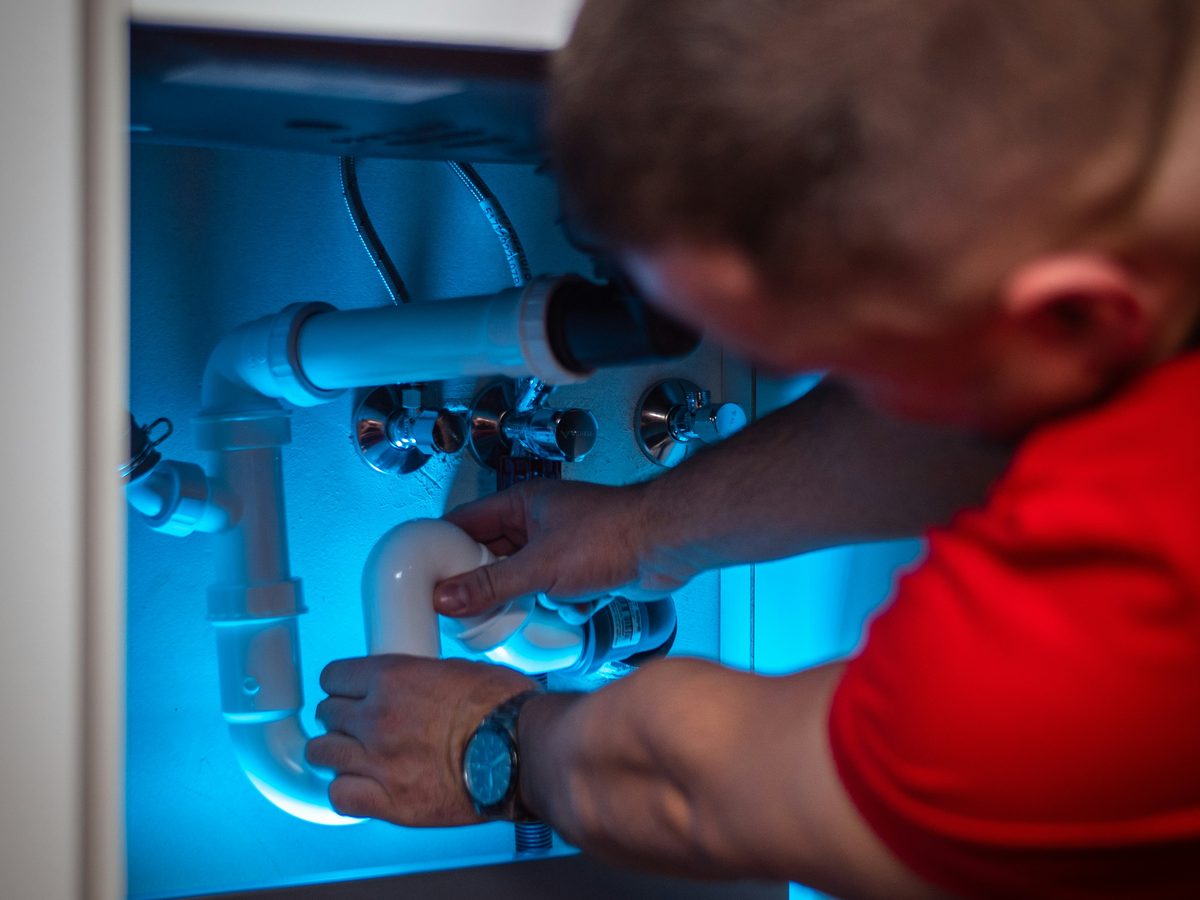
An automatic shutoff valve is installed on the main line and closes itself when it detects a leak, either through sensors placed near water heaters and under sinks or by watching for water flow that does not stop. They are worth considering for homes that sit empty during travel, homes with finished basements, and anyone who has already had a water loss. They do not replace knowing where the manual valve is, since a power outage, a dead battery, or a failed sensor can leave one unable to act. Ask a plumber whether one fits your system.
What To Do After You Close It
With the water stopped, the urgent part is over. Next steps:
- Turn off power to wet areas if water has reached outlets, fixtures, or appliances, and stay out of standing water near anything electrical.
- Move belongings out of the water and start removing what is standing.
- Take photos of the damage and the failed part before anything is cleaned up, for your records and for any insurance claim.
- Find the source. If it is obvious, a plumber can repair it. If water appeared with no visible cause, leak detection locates it without opening more walls than necessary.
Finding your main shutoff takes about five minutes. Do it this week, test it, label it, and show everyone in the house. If it will not turn, leaks, or cannot be found, our licensed plumbers can locate, test, and replace a main water shutoff anywhere in Denver Metro.
CO Lic. #PC.0005786 · CO Lic. #EC.0101962. This article is general guidance for Denver Metro homeowners and does not replace an on site inspection of your specific system.
Questions
Main Water Shutoff Questions
Which way do I turn the main water shutoff to close it?
Clockwise for a round handle, until it stops. For a lever handle, turn it a quarter turn so it sits across the pipe instead of in line with it. If a round handle will not turn with firm hand pressure, do not force it with a wrench, because an old valve stem can break.
Is it safe to turn off my main water shutoff?
Yes. Closing the main does not harm your plumbing. If the water will be off for hours or the lines will be drained, set a gas water heater to vacation or pilot and switch off an electric water heater at the breaker, then turn them back on once water flows from the hot side again.
What if my main water shutoff will not turn or will not stop the water?
Stop forcing it, call your water utility to close the curb stop near the street, and call a plumber. A main shutoff that will not close in an emergency needs to be replaced, usually with a quarter turn ball valve.
Can I turn off the water at the curb myself?
The curb stop is operated with a special key and is normally handled by the water utility. If the leak is on the service line outside the house, or the main inside will not close, call the emergency number for your water utility, which is listed on your bill.
How often should I test my main water shutoff?
Once a year. Close it fully, confirm the water stops at a faucet, then open it again slowly. Valves that never move are the ones that seize, and fall is a convenient time to do it along with winterizing the hose bibs and the sprinkler system.
Why is my shutoff valve dripping after I used it?
Older gate valves often weep at the stem after they are turned, because the packing around the stem has dried out. Gently tightening the packing nut just below the handle often stops it. If the drip continues, or the valve body itself is leaking, have the valve replaced.
Keep Reading
How To Keep Pipes From Freezing In A Denver Winter
What freezes first here, the fall checklist, and what to do if a line has already frozen.
Read the article
Leak Detection and Repair
Hidden leaks behind walls, under slabs, and beneath floors, found before the damage spreads.
View leak detectionShutoff Valve Service
Know It Works Before You Need It
Main shutoff location, testing, and replacement across Denver Metro. A licensed plumber inspects the valve and puts the price in writing before any work begins.
CO Lic. #PC.0005786 · CO Lic. #EC.0101962 · 2M GL · 5M Umbrella · Bonded · Insured