Water Heaters
No Hot Water? 9 Reasons Your Water Heater Stopped Working
Cold water halfway through the shower is not always a dead water heater.
Nine common reasons a water heater stops making hot water, the checks you can safely make yourself, and when to call a professional.
There is nothing worse than stepping into the shower on a cold Colorado morning and finding out there is no hot water. Maybe the water turned cold halfway through your shower. Maybe every faucet in the house is running cold. Either way, you want to know what happened and how to fix it.
If there is no hot water in your house, the problem could be a tripped breaker, a failed heating element, or a faulty gas valve. The good news is that a water heater that stops working does not always need to be replaced. Many water heater problems can be repaired.
This guide covers nine common causes of a lack of hot water, simple troubleshooting steps, and when to call a professional.
No Hot Water? The Short Answer
On an electric water heater, the most common causes are a tripped breaker, a failed heating element, or a faulty thermostat. On a gas water heater, it is usually a pilot or ignition problem, a failed thermocouple or flame sensor, or the gas valve. Sediment, an undersized tank, a broken dip tube, tankless scale, and simple old age cover most of the rest.
You can safely check every faucet, the breaker, any error codes, and the area around the tank for leaks. If you smell gas, leave the building and call your gas utility from outside. Leave gas, electrical, and internal repairs to a licensed plumber.
1. Your Water Heater Has Lost Power
If you have an electric water heater, start by checking whether it has power. Electric water heaters use heating elements to warm the water inside the tank, and without electricity those elements cannot heat anything.
Common causes include:
- A tripped circuit breaker
- A faulty electrical connection
- A failed thermostat
- Damaged electrical controls
- A faulty heating element
What should you check?
Find your electrical panel and look for a breaker labeled for the water heater. If the breaker has tripped, do not keep resetting it. A breaker that trips repeatedly points to an electrical problem.
Some electric water heaters have a high temperature reset button behind an access panel. Because that area contains live electrical parts, leave that inspection to a qualified professional. If the water heater has power but still produces cold water, the problem may be the thermostat or a heating element.
2. The Pilot Light Or Gas Valve Is Not Working
Gas water heaters use a burner to heat the water. Some models have a standing pilot light, while others use electronic ignition. If the burner cannot ignite, the water heater will not produce hot water.
Common causes include:
- A pilot light that has gone out
- A faulty thermocouple or flame sensor
- A damaged gas valve
- An ignition system failure
- An interruption in the gas supply
Can you relight a water heater pilot light?
Some older gas water heaters have printed instructions for relighting the pilot. Always follow the directions on the water heater label or in the owner's manual, and never try to relight a pilot if you smell gas.
Natural gas has a rotten egg smell added so leaks can be detected. If you notice that smell, leave the building immediately and contact your gas utility or emergency services from a safe location. If the pilot keeps going out, schedule a professional inspection.
3. Your Water Heater Has A Failed Heating Element
Most standard electric tank water heaters use two heating elements. If one element fails, the water heater may still produce some hot water, but it will run out much faster. If both stop working, you may have no hot water at all.
Signs of a failed heating element include:
- Water that stays lukewarm
- Hot water running out quickly
- Longer heating times
- Cold water even though the heater has power
Heating elements wear out over time, and sediment buildup can shorten their life. A plumber or qualified technician can test the elements and replace a faulty one. In many cases, replacing the part is a much smaller job than installing a new water heater.
4. Your Water Heater Thermostat Is Faulty
The water heater thermostat controls the water temperature. When it stops working, it may fail to switch on the heating elements or the gas burner.
You might notice:
- Water that never gets hot enough
- Sudden changes in water temperature
- Hot water running out sooner than usual
- A water heater that does not heat properly
Should you turn up the water heater temperature?
Not necessarily. If the water heater suddenly stops heating, raising the temperature setting may not fix the problem, and it increases the risk of burns.
For many households, a delivered hot water temperature around 120°F helps reduce scalding risk, although storage temperatures and mixing valve settings may differ from system to system. If your water temperature changes without explanation, have a plumber inspect the controls.
5. Sediment Buildup Is Affecting Your Water Heater
Over time, minerals in the water settle at the bottom of the tank. That sediment can affect heating performance and reduce the amount of usable hot water. It is worth watching in Denver area homes, especially when the water heater has not had regular maintenance.
Common warning signs include:
- Popping or rumbling noises
- Water taking longer to heat
- Hot water running out sooner
- Higher energy bills
- Unusual sounds while the burner is running
Our guide to water heater popping and rumbling noises explains what each sound means.
Can sediment stop a water heater from working?
Heavy sediment can interfere with heating and contribute to other problems, but it is not always the cause. A bad thermostat, a failed heating element, or a gas control problem may be responsible instead. A plumber can inspect the tank and determine whether flushing or a repair would help.
Avoid draining an older water heater without knowing its condition. Hot water, pressure, and worn valves can all create safety risks.
Still No Hot Water?
Have A Licensed Plumber Find The Cause
We test the power, the controls, the elements or burner, and the tank, then explain what we found and your options before any work begins.
Call 720-295-9903Water heater repair and replacement across Denver Metro.
6. Your Water Heater Is Too Small For Your Home
Sometimes the water heater works correctly but cannot keep up with your household. This often happens when several people shower back to back, or when several appliances use hot water at the same time.
You may notice:
- The first shower is hot, but the next one turns cold.
- Hot water runs out when the dishwasher is running.
- The tank takes a long time to recover.
- Your family runs out of hot water on busy mornings.
Do you need a larger water heater?
Not always. A plumber should first check whether your current water heater is working properly, because a broken dip tube, a failed heating element, or a thermostat problem can make a correctly sized tank seem too small.
If the system works normally but still cannot keep up, a larger tank or a properly sized tankless water heater may help. The right choice depends on your hot water use, the available space, and the existing connections.
7. Your Tankless Water Heater Has A Problem
A tankless water heater heats water as you use it instead of storing it in a tank. These systems provide continuous hot water within their rated capacity, but they can still develop problems.
Common causes include:
- Mineral scale inside the heat exchanger
- A clogged water inlet filter
- Ignition or gas supply problems
- A faulty flow sensor
- An error code or safety shutdown
- Low water flow
Why does my tankless water heater keep going cold?
Tankless water heaters need enough water flow to activate the burner or elements. If the flow drops too low, the heater may shut off. Cold incoming water during Colorado winters also reduces how much hot water a tankless unit can deliver at once.
If the unit displays an error code, write it down and check the owner's manual. Do not open the cabinet or attempt gas or electrical repairs yourself. Regular maintenance and descaling approved by the manufacturer help prevent mineral buildup.
8. Your Water Heater Has A Broken Dip Tube
Inside many tank water heaters, a dip tube carries incoming cold water down toward the bottom of the tank. That keeps cold water from mixing too quickly with the hot water near the top. If the dip tube breaks, cold water mixes with hot water before it reaches your faucets.
Common signs include:
- Hot water running out much faster than before
- Lukewarm water during showers
- Short bursts of hot water followed by cold
- Less hot water without any obvious leak
A broken dip tube does not always stop the water heater from heating. Instead, it reduces the amount of usable hot water. A plumber can inspect the tank and determine whether the dip tube needs replacing.
9. Your Water Heater Is Near The End Of Its Life
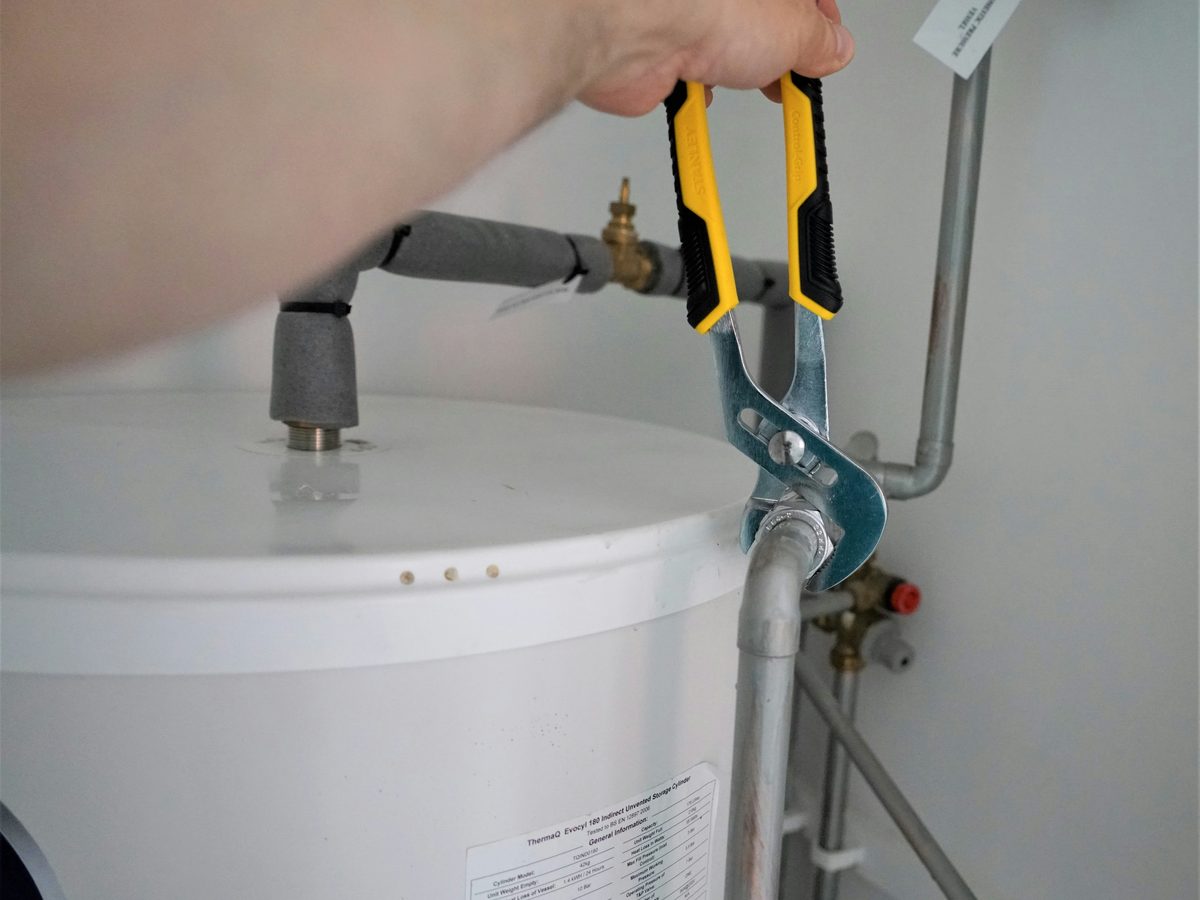
Water heaters do not last forever. A conventional tank water heater typically lasts around eight to twelve years, and the actual service life depends on water quality, installation, usage, and maintenance. As the system ages, parts wear out and the tank may begin to corrode.
Warning signs include:
- Frequent water heater repairs
- Rust colored hot water
- Water leaking from the tank
- Strange noises
- Less hot water than before
- Higher energy bills
Should you repair or replace an old water heater?
It depends on the problem. A failed thermostat or heating element may well be worth repairing. A leaking storage tank, however, usually means replacement, because damage to the tank itself generally cannot be repaired safely.
If your water heater is getting older and needs frequent repairs, weigh one more repair against replacing it. Our guide to the eight signs you need a new water heater can help you decide when replacement makes sense.
No Hot Water In Your House? Check These Things First
Before scheduling a repair, there are a few safe checks you can make.
- Check every faucet. Turn on the hot water at the kitchen and bathroom sinks. If only one faucet or shower has a problem, the issue may be that fixture's cartridge or mixing valve, which is a fixture repair. If every faucet runs cold, the problem is more likely the water heater or the hot water supply.
- Identify your water heater type. Gas, electric, tankless, or heat pump. Each has different parts and different common problems, so knowing the type narrows down the cause.
- Look for error codes. Many newer water heaters have digital displays or status lights. If you see an error code, write it down so your plumber can use it.
- Check for leaks. Look around the tank and the visible pipe connections. Water pooling near the tank may mean a leaking connection, a faulty valve, or tank failure, and a leak can cause serious damage if ignored. Do not touch electrical parts or attempt repairs on a leaking unit.
- Check the circuit breaker. For an electric water heater, look for a tripped breaker in the panel. If it keeps tripping, leave it off and call a qualified professional.
- Think about recent hot water use. Did several people shower before the water turned cold? A tank water heater may simply need time to recover. If hot water runs out much faster than it used to, though, the system may need service.
When Is No Hot Water An Emergency?
A lack of hot water is frustrating, but not every problem needs emergency service. Some situations do need immediate attention.
Get urgent help if
You smell natural gas or a rotten egg odor, your carbon monoxide alarm sounds, water is leaking heavily from the tank, water is reaching electrical equipment, or you notice smoke, sparks, or overheating. If you smell gas or suspect carbon monoxide, leave the building and call emergency services from a safe location. For a major leak, shut off the water supply only if you can do so safely.
If the water heater has simply stopped heating and there are no signs of danger, you can usually schedule a professional inspection at a convenient time. Knowing where your main water shutoff is before a leak happens makes the urgent cases far easier to handle.
How To Prevent Water Heater Problems
Regular maintenance helps a water heater last longer and reduces unexpected breakdowns. During a maintenance visit, a qualified plumber may:
- Inspect the tank for leaks or corrosion.
- Check the anode rod on tank models that have one.
- Flush sediment when appropriate.
- Inspect the temperature and pressure relief valve.
- Check the thermal expansion tank, if one is installed.
- Test the heating elements and thermostats.
- Inspect the gas burner and venting.
- Descale tankless systems when needed.
Your water heater manual should list the recommended maintenance schedule. Regular service catches small problems before they turn into larger repairs. Annual professional maintenance is a useful starting point for many systems, although specific needs vary by model and water conditions.
Water Heater Problems In Denver Homes
A few local conditions affect water heater performance in Denver area homes.
Mineral buildup
Minerals in the water collect inside tank water heaters and form scale in tankless heat exchangers. Over time, that buildup can reduce heating performance and increase maintenance needs.
Cold winter water temperatures
Incoming water temperatures drop during Colorado winters, so the water heater has to work harder to bring colder water up to temperature. That makes an undersized or poorly performing system much more noticeable in winter.
High altitude gas equipment
Denver's elevation affects gas fired appliances. Gas water heaters must be installed and configured according to the manufacturer's high altitude requirements, and improper sizing or setup can contribute to poor heating performance. Our page on Colorado water heater rules covers the state and federal requirements for new units.
Professional Water Heater Repair In Denver
If your water heater has stopped working, The Electricians and Plumbers can help. Our licensed plumbing team provides water heater repair, installation, and replacement throughout the Denver metro area, and we work with gas, electric, tankless, and heat pump water heaters.
Whether you are dealing with a faulty heating element, a leaking tank, or a water heater that cannot keep up with your family, we will inspect the system and explain your options. Our team also holds the electrical license, which makes repairs and upgrades simpler when a water heater needs a new circuit or other electrical work.
We serve homeowners in Denver, Centennial, Aurora, Littleton, Englewood, Lakewood, Highlands Ranch, Parker, and surrounding communities. Do not spend another day without hot water. We will help you decide whether a repair or a replacement makes more sense.
CO Lic. #PC.0005786 · CO Lic. #EC.0101962. This article is general guidance for Denver Metro homeowners and does not replace an on site inspection of your specific system.
Questions
No Hot Water Questions
Why do I suddenly have no hot water in my house?
A sudden loss of hot water may be caused by a tripped breaker, a failed heating element, a thermostat problem, a gas ignition failure, or a safety shutdown. If every faucet runs cold, start by checking the water heater.
Why is my water heater not heating even though it has power?
The problem could be a failed heating element, a faulty thermostat, damaged controls, or another internal issue. A water heater can have power without heating any water.
Why do I have cold water but no hot water?
If cold water flows normally but no water comes from the hot side, the problem may be the water heater, a closed valve, or blocked piping. If water flows from the hot taps but stays cold, a heating problem is more likely.
Why is my hot water only lukewarm?
Lukewarm water can come from a faulty heating element, a thermostat problem, a broken dip tube, or a mixing valve issue. A water heater that is too small for your household may also struggle during heavy use.
How long does it take a water heater to heat up again?
Recovery time depends on the tank size, the heating capacity, the incoming water temperature, and the type of water heater. Many tank water heaters need roughly thirty minutes to more than an hour after heavy use, and some take longer.
Can I fix my water heater myself?
You can safely check the thermostat setting, any visible error codes, and your electrical panel. Leave repairs involving gas connections, heating elements, internal wiring, and pressure controls to a qualified professional.
Is it worth repairing a ten year old water heater?
Sometimes. A minor repair can still make sense if the tank is in good condition. Frequent breakdowns, corrosion, or a leaking tank make replacement the better choice.
Who provides water heater repair in Denver?
The Electricians and Plumbers provides water heater troubleshooting, repair, installation, and replacement throughout the Denver metro area. Call 720-295-9903 to schedule service.
Keep Reading
Eight Signs You Need A New Water Heater
The eight signs a plumber looks for, how to read the age off the label, and repair versus replacement.
Read the article
Water Heater Repair and Installation
Tank, tankless, and heat pump. Repair, replacement, venting, and permits across Denver Metro.
View water heatersWater Heater Repair
Get Your Hot Water Back
Water heater troubleshooting, repair, and replacement across Denver Metro. A licensed plumber inspects the actual unit and puts the price in writing before any work begins.
CO Lic. #PC.0005786 · CO Lic. #EC.0101962 · 2M GL · 5M Umbrella · Bonded · Insured